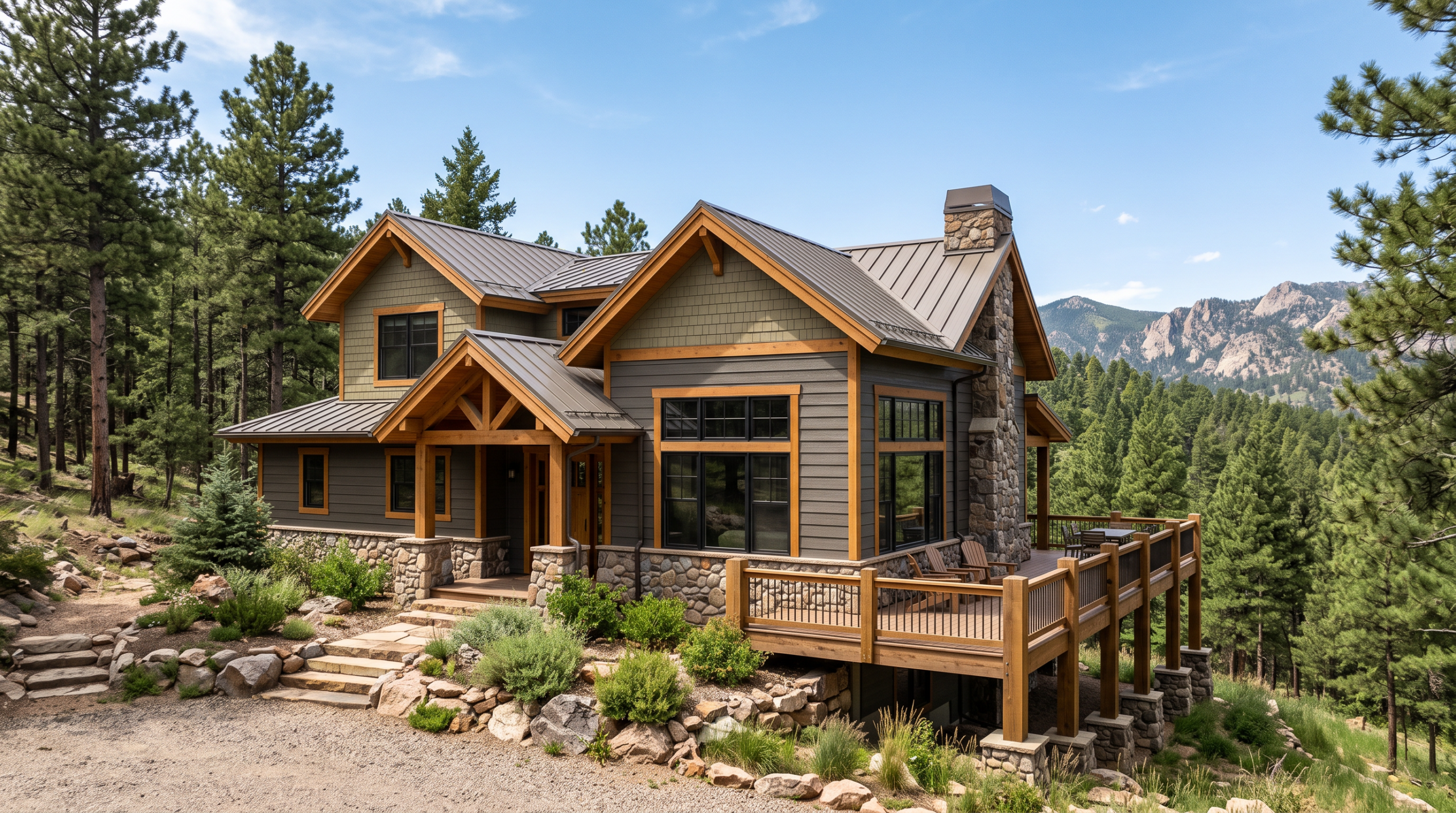
Quick Answer: Many Conifer homes built from the 1970s through the 1990s have cedar lap, cedar shake, or T1-11 plywood siding. By now, that siding often shows woodpecker holes, rot along the snow line, and paint that won’t hold. James Hardie HZ5 fiber cement replaces it with a noncombustible siding engineered for freeze-thaw climates. Cedarmill textures, shingle gables, and board-and-batten panels keep the rustic mountain character. As a James Hardie Elite Preferred Contractor, 5280 Exteriors can offer Hardie’s strongest warranty coverage on Conifer installations.
Drive through Aspen Park, Conifer Meadows, or the neighborhoods off Pleasant Park Road, and you’ll see the same thing: homes with a lot of wood on the outside and a lot of forest around them. Wood siding looked right when these homes were built. Forty years of 8,000-foot sun, snow, and wildlife later, it’s often the most worn-out part of the house.
This guide covers what we find when we remove old siding in Conifer, and how to choose a James Hardie design that still looks like it belongs on the mountain.
Looking for the Jefferson County wildfire code details? They’re in our Conifer wildfire code and James Hardie siding guide.
What’s Really Happening to Your Conifer Siding
Woodpecker damage
Flickers and other woodpeckers drum on and drill into cedar and T1-11, especially on the side of the house facing the trees. Once a hole opens, water and insects follow, and so do more birds. Patching treats the symptom. Fiber cement doesn’t give woodpeckers the soft, hollow-sounding wood they’re looking for.
Rot along the snow line
In Conifer, snow piles against the lowest courses of siding for weeks at a time, and it builds up where decks and roofs shed. When we remove old siding, the damage usually sits in the bottom 12 to 24 inches, around deck ledgers, and below roof-to-wall intersections. James Hardie’s installation specs require clearance from the ground, roofs, and decks, so the new siding isn’t sitting in that snow and water.
T1-11 delamination
T1-11 is plywood with grooves cut into the face. Once the paint fails, the layers soak up water, swell, and separate. Painting over delaminated T1-11 doesn’t hold for long.
The repaint cycle
At high elevation, UV breaks down stain and paint quickly. Many Conifer homeowners tell us they’re re-staining every few years. James Hardie ColorPlus siding has its color baked on at the factory and carries its own finish warranty, so the repaint cycle mostly goes away.
How to Keep the Mountain Character with James Hardie
Fiber cement doesn’t have to look suburban. Here’s how we design Hardie exteriors that fit Conifer.
| If you love… | Use this James Hardie product | Where it works best |
|---|---|---|
| Cedar lap siding | HardiePlank lap siding, Cedarmill texture | Main walls; wider exposures read more rustic |
| Cedar shakes | HardieShingle | Gables, dormers, and accent bands |
| Barn or board-and-batten look | HardiePanel vertical siding + HardieTrim battens | Garages, modern mountain homes, lower stories |
| Heavy timber trim | HardieTrim boards in wider widths | Corners, window surrounds, fascia |
| Clean, finished undersides | HardieSoffit panels | Eaves, and the open undersides of overhangs |
Mixing textures is the most effective way to keep a Conifer home from looking flat. Lap siding on the main walls, shingles in the gables, and wide trim at corners and windows give you the layered look of a wood-sided mountain home.
A note on log homes
James Hardie doesn’t make a round-log profile. We won’t pretend fiber cement looks like a full log wall. For log-sided or half-log homes, we usually recommend one of two approaches: replace the worst-exposed walls and gables with lap or board-and-batten, or pair Hardie with the existing log walls in a deliberate accent design. We’ll show you examples of both.
ColorPlus colors that fit the forest
Earthy, mid-to-dark tones blend with pine forest and granite outcrops. Colors Conifer homeowners often consider include Timber Bark, Mountain Sage, Iron Gray, Aged Pewter, Khaki Brown, and Monterey Taupe. Try them on a photo of your own home with our James Hardie visualizer.
Why HZ5 Matters in Conifer
James Hardie builds siding for different climate zones. HZ5 products are engineered for climates with freezing temperatures, snow, and big seasonal swings, which describes Conifer exactly. We install HZ5 on every Colorado project. Hardie fiber cement is also noncombustible. That’s the key reason it’s a leading choice for homes in Jefferson County’s Wildland-Urban Interface.
What a Conifer Siding Replacement Looks Like
- Free estimate and wall assessment. We look for woodpecker damage, rot zones, and deck and roof intersections, and we check your WUI status.
- Design and color selection. Textures, trim widths, and ColorPlus colors, with a visualizer mockup.
- Permit. Full re-siding in unincorporated Jefferson County requires a building permit. We handle it.
- Tear-off and sheathing repair. Rotted sheathing is replaced, not covered over. We add new weather-resistive barrier and flashing at every window, door, deck ledger, and roofline.
- Installation. Most Conifer homes take about 4 to 8 working days. Steep lots, long private drives, and tall gables affect staging and schedule.
- Final walkthrough and warranty registration.
Timing tip: Conifer’s building season is shorter than Denver’s. May and October snow is common. Book a spring or summer install early in the year for the best schedule.
Doing windows too? Replacing windows during a siding project gives the best flashing detail. See how to choose Pella windows for Conifer. Rebuilding the deck? Plan the ledger flashing with your TimberTech deck in Conifer.
Why Conifer Homeowners Choose 5280 Exteriors
- James Hardie Elite Preferred Contractor. Fewer than 1% of siding contractors nationwide hold this designation.
- Back-to-back Presidents Club Award winner (2024 and 2025)
- 20+ years in Jefferson County mountain communities, with no travel fees within our mountain service area
- One contractor for siding, Pella windows, GAF roofing, and TimberTech decking
Learn more about James Hardie fiber cement siding or see our full Conifer exterior services. Financing options are available.
Ready to retire the stain brush? Call (720) 707-6964 or request a free estimate.
Frequently Asked Questions
What’s the best replacement for cedar siding in Conifer, CO?
James Hardie HZ5 fiber cement is the most common upgrade. It’s noncombustible, holds up to freeze-thaw cycles, resists woodpeckers, and comes in Cedarmill and shingle textures that keep a natural wood look.
Does James Hardie siding stop woodpecker damage?
Fiber cement is much less attractive to woodpeckers than cedar or T1-11 because it isn’t soft, hollow-sounding wood. It’s one of the most effective long-term fixes for repeated woodpecker damage.
Can T1-11 siding be covered instead of removed?
We don’t recommend it. Delaminated or rotting T1-11 traps moisture and hides sheathing damage. Removing it lets us repair the wall and install a proper water barrier before the new siding goes on.
Can James Hardie siding look rustic on a mountain home?
Yes. Combining HardiePlank Cedarmill lap siding, HardieShingle gables, board-and-batten HardiePanel, and wide HardieTrim in earthy ColorPlus colors gives a layered mountain look.
Does James Hardie make log siding?
No. James Hardie doesn’t offer a round-log profile. Log-home owners typically use Hardie on the most exposed walls and gables, or as a designed accent next to existing log walls.
What is James Hardie HZ5?
HZ5 is James Hardie’s product line engineered for climates with freezing temperatures, snow, and wide seasonal swings, like Colorado’s mountain communities. 5280 Exteriors installs HZ5 on Colorado homes.
How long does siding replacement take in Conifer?
Most Conifer homes take about 4 to 8 working days. Home size, sheathing repairs, steep lots, and site access can extend that.