JEFFERSON COUNTY’S NEW WILDFIRE CODE IS HERE. WHAT CONIFER HOMEOWNERS NEED TO KNOW ABOUT THEIR SIDING.
I’ve been installing James Hardie siding on mountain homes in Conifer and Evergreen for over 20 years. And in that time, I’ve watched the conversation around siding change — slowly at first, then fast.
For a long time, the siding conversation in Conifer was mostly about aesthetics and durability. You wanted something that could handle the freeze-thaw, survive the UV at elevation, and not rot out from spring snowmelt. Fiber cement was already the clear answer on those fronts. But as of July 1, 2026, the conversation has changed in a fundamental way.
Jefferson County’s Wildfire Resiliency Code is now in effect. And if your home sits in a Wildland Urban Interface zone — which most Conifer properties do — your exterior siding is now a code compliance issue, not just a preference.
Let me break down what that actually means for you.
What Is Jefferson County’s Wildfire Resiliency Code?
The Colorado Wildfire Resiliency Code (CWRC) was adopted statewide on July 1, 2025. It required all local jurisdictions in WUI zones to adopt it by April 1, 2026 and begin enforcement by July 1, 2026. Jefferson County went further — the county developed its own Wildfire Resiliency Code, which was approved by the Board of County Commissioners and is stricter than the state minimum.
The code applies to new construction and to alterations or additions exceeding 500 square feet in WUI zones. It establishes structure hardening requirements based on your property’s Fire Intensity Classification — Low, Moderate, or High.
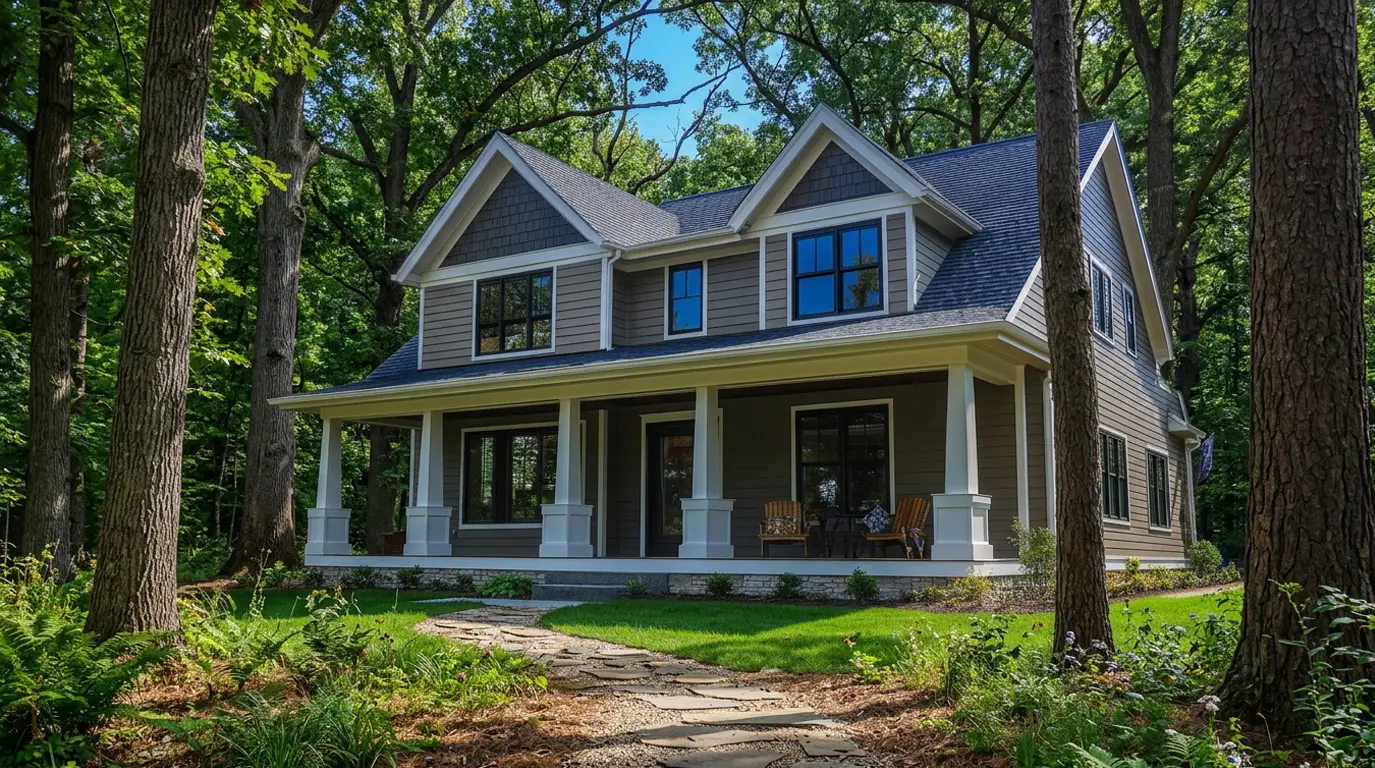
For properties in the WUI Intermix zone (which covers most of the forested, developed areas of Conifer), the requirements are Class 2 structure hardening — the more demanding of the two tiers. That includes exterior wall materials that resist ignition from radiant heat and ember contact.
In plain terms: vinyl siding and untreated wood are no longer appropriate materials for covered projects in most Conifer locations. They don’t meet the standard.
Why Conifer Is One of the Most Exposed Communities in Colorado
This isn’t alarmism. Jefferson County has publicly stated it ranks second among Colorado’s 64 counties for wildfire risk. Conifer and Evergreen are specifically called out in county documentation as among the highest-risk areas within the county.
That risk profile is driven by the combination of terrain, vegetation, and development density that characterizes this part of the foothills. The homes sit in and among heavy forest fuel loads, on slopes that accelerate fire behavior, in communities where evacuation routes are limited.
The new code reflects the county taking that risk seriously. And honestly, I think it’s overdue. I’ve walked properties in Conifer where the siding was cedar or vinyl — materials that, in a fire scenario, become part of the problem instead of part of the defense.
How James Hardie Fiber Cement Meets — and Exceeds — the Code
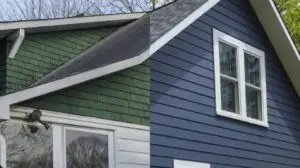
James Hardie is not combustible. That’s the foundation. Fiber cement does not ignite from radiant heat or ember contact. It carries a Class A fire rating under ASTM E84 testing — the highest classification available. It is explicitly recognized by the Colorado Wildfire Resiliency Code as a compliant exterior wall material for Moderate and High Fire Intensity zones.
Beyond code compliance, here’s why it’s the right material for a Conifer mountain home on its own merits:
- Dimensional stability through freeze-thaw cycling — it doesn’t crack, warp, or buckle like vinyl at elevation
- UV resistance — ColorPlus Technology factory finish holds color through intense high-altitude sun exposure
- Moisture resistance — will not rot, absorb water, or delaminate from sustained snow contact
- Impact resistance — stands up to wind-driven debris and hail without cracking
- 30-year warranty when installed by an Elite Preferred Contractor — a warranty that’s backed and honored
The combination of fire code compliance and climate performance is why virtually every mountain home project we price in the Conifer area comes back to Hardie. It’s not just the best option — in many cases it’s now the only option that satisfies both the code and the conditions.
What This Means If You’re Planning a Project in 2026
If you’re planning a siding replacement, addition, or significant exterior renovation in Conifer this year, here are the practical things you need to know:
Trigger point is 500 square feet
Alterations and additions exceeding 500 square feet in a WUI zone trigger WUI code compliance requirements. A full siding replacement on most Conifer homes will exceed this threshold. Work with a contractor who understands how to document and permit to code.
Contractor selection matters more than it used to
Installing WUI-compliant siding isn’t just about material selection — it requires proper installation specifications, flashing details, and permit documentation. An Elite Preferred Contractor who works regularly in Jefferson County will handle this correctly. A general handyman or out-of-area contractor may not.
Insurance may be a factor
Mountain homeowner insurance has gotten expensive. Some carriers are now asking about siding material and fire resistance as part of underwriting. Upgrading to non-combustible fiber cement may have a favorable impact on your coverage options — worth asking your agent.
Don’t wait until fall
Mountain project timelines compress fast. Conifer projects have shorter installation windows due to weather, and we’re already booking out into late summer. If you’re considering a siding project this year, the time to call is now, not September.
A Few Words on Who We Are
5280 Exteriors has been serving the Jefferson County mountain corridor for over 20 years. We’re a James Hardie Elite Preferred Contractor — the top tier of Hardie’s certification program — and we’re back-to-back James Hardie Presidents Club Award winners for 2024 and 2025. That credential is rare in Colorado and it matters when your installation needs to satisfy both a code inspection and a 30-year warranty claim.
We’ve installed Hardie on homes throughout Conifer, Evergreen, Golden, Morrison, and the broader Jefferson County foothills. We know this terrain, we know the permit process, and we know the installation considerations that come with mountain sites.
If you have questions about how the new Wildfire Resiliency Code applies to your specific property, or you’d like a free estimate for a Hardie siding project, I’m happy to talk through it.
Call us at (720) 707-6964 or request a free your estimate.