JAMES HARDIE SIDING IN GOLDEN, CO: A HOMEOWNER’S GUIDE
If you’ve started researching siding options for your Golden home, you already know the search results weren’t written with you in mind. Most of what’s out there is generic — national comparisons between vinyl and fiber cement based on prices from Phoenix or suburban Chicago. Product reviews from markets where the biggest weather concern is a summer thunderstorm.
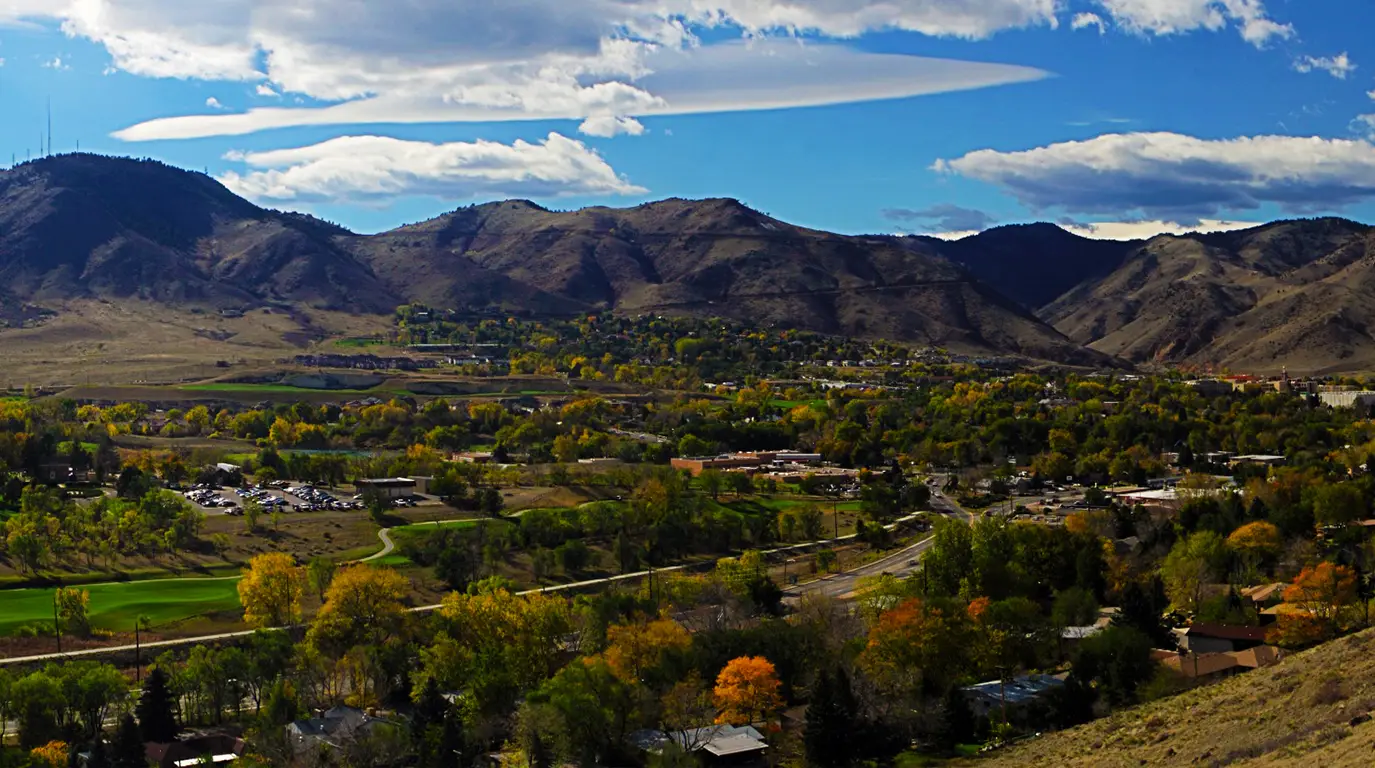
Golden is something different. At roughly 5,675 feet of elevation, sitting directly at the base of North Table Mountain and South Table Mountain, Golden’s position against the foothills creates conditions that are genuinely demanding on exterior materials. The city is one of Colorado’s most exposed communities when it comes to UV intensity, temperature cycling, wind, hail, and wildfire risk — and the homes that dot the canyons, hillsides, and established neighborhoods near downtown pay the price when siding decisions are made without understanding that context.
I’ve been replacing siding across the Denver metro and Front Range for over 20 years. We’ve worked in Golden on homes ranging from the older Victorian-era structures near downtown to the newer canyon-adjacent builds off Highway 6 and up toward Tucker Gulch. In that time, I’ve seen vinyl siding fail within a handful of seasons at Golden’s elevation, watched wood siding installations lose their finish in five years because the contractor didn’t account for altitude UV, and assessed home after home where the original siding simply wasn’t built for what Golden throws at it.
This post is about what Golden’s specific conditions actually mean for your siding decision — and what to look for when you’re choosing both a product and a contractor.
What Makes Golden’s Climate Unusually Hard on Exterior Siding
UV Radiation at Elevation
Golden sits at roughly 5,675 feet — high enough that the atmosphere above your home is meaningfully thinner than at sea level. That translates directly into more intense solar radiation hitting your siding every day of the year. This is not a subtle difference. Colorado’s UV index regularly exceeds what most coastal or Midwestern cities experience, and in Golden’s exposed, south-facing neighborhoods and canyon-rim homes, that intensity is compounded by direct solar reflection off exposed rock and open terrain.
The practical consequence: field-painted siding fades faster in Golden than manufacturer specifications suggest, because most of that data is calibrated for national averages that have nothing to do with a home sitting at the base of a mesa in Jefferson County. We see it regularly — homeowners who invested in premium exterior paint at installation are back looking at repaint costs within five to seven years, sometimes less on south and west exposures.
This is the core reason we recommend James Hardie’s ColorPlus® Technology for Golden homes. ColorPlus is a factory-applied finish, baked on at high temperature in a multi-coat process, carrying a 15-year limited warranty against fading. That warranty is real protection for Golden’s UV environment in a way that field painting simply cannot replicate.
Hail Exposure in Jefferson County
Golden sits in Jefferson County’s hail corridor. Colorado is one of the most hail-active states in the country, and Golden’s position along the foothills means it faces storms rolling in from the south and southwest with significant force and minimal terrain buffering on the western side. Large hail events — golf ball size and above — are not uncommon, and the homes on Golden’s mesa edges and open hillsides take the full impact.
Vinyl siding cracks under serious hail impact. Aluminum dents. Engineered wood absorbs moisture through impact damage and begins degrading internally. James Hardie fiber cement responds to hail differently — it doesn’t dent, and damage is typically surface scarring rather than structural failure.
For Golden homeowners who go through an insurance claim after a hail event, the material you chose years earlier matters. Fiber cement is straightforward to assess, document, and partially repair. It tends to produce cleaner insurance outcomes than vinyl or wood, where impact damage can cascade in ways that are expensive to fully remediate.
Freeze-Thaw Cycling
Golden averages well over 150 days per year where overnight temperatures drop below freezing — often the same days where afternoon temperatures climb to 55 or 60°F. That kind of daily thermal cycling, repeated hundreds of times across Colorado’s long shoulder seasons, is punishing on exterior materials.
Vinyl expands and contracts dramatically with temperature. Over years of freeze-thaw cycling at Golden’s elevation, vinyl profiles warp, seam gaps open, and moisture infiltration becomes a problem that compounds quietly until it becomes visible and expensive. The material that looked fine at installation begins failing in ways that aren’t always obvious on the surface.
James Hardie’s HZ5 formulation is specifically engineered for climates with exactly this pattern — significant freeze-thaw cycling, humidity variation, and the thermal stress of Colorado’s spring and fall temperature swings. It is dimensionally stable in a way that vinyl, by its material nature, cannot be over the long term.
Wind Exposure on the Foothills Interface
Golden’s position at the foothills interface means real wind exposure that most of the metro doesn’t deal with. Downslope wind events — the same chinook-pattern systems that drive high fire risk across Jefferson County — accelerate off the ridgeline and produce gusts that test installation quality in ways a sheltered suburban neighborhood never will. Homes on the mesa tops, along the canyon entrances, and on Golden’s open western edge feel this most directly, but sustained lateral wind loading is a factor across the city during front-range weather systems.
Siding that is improperly fastened — regardless of whether it’s fiber cement, vinyl, or wood — can fail under this kind of wind pressure. Installation standards matter as much as product quality. James Hardie’s installation specifications include fastening protocols specifically designed for high-wind zones. A contractor certified to Elite Preferred standards is trained and tested on those specifications. A general contractor who simply orders Hardie product is not.
Wildfire Risk in Golden and the Surrounding WUI
This conversation has become impossible to ignore across the entire Front Range since the Marshall Fire in December 2021, which destroyed over 1,000 homes in Louisville and Superior. Those were communities with near-identical wildfire exposure profiles to Golden’s western and canyon-adjacent neighborhoods. Golden is surrounded by WUI — Wildland-Urban Interface terrain — on three sides, with North Table Mountain, South Table Mountain, and the canyon corridors all representing areas where fire can move rapidly toward residential structures.
The Clear Creek canyon corridor, the open space along South Table Mountain, and Golden’s historic neighborhoods near the base of the foothills all sit in zones where ember cast from an approaching fire event is a meaningful risk. This is not abstract.
James Hardie fiber cement is non-combustible. It is made of cement, sand, and cellulose fiber — it will not ignite when exposed to direct flame or radiant heat from an approaching wildfire. Vinyl siding melts and burns. Wood siding burns. For Golden homeowners whose properties sit near open space, canyon edges, or the foothills interface, the choice of siding material is a meaningful decision about your home’s resilience in a fire event — not a marketing talking point.
Why Contractor Selection Matters as Much as Product Selection in Golden
James Hardie warranties are among the strongest in the siding industry — 30 years on the product, 15 years on the ColorPlus factory finish. But those warranties are contingent on installation by a certified contractor following James Hardie’s written installation guidelines. If the contractor skips the required moisture barrier, fastens boards at the wrong nail depth, fails to back-prime cut edges, or leaves insufficient clearance from grade, James Hardie can deny warranty claims — and does.
I’ve assessed failed installations in Jefferson County where the product was right and the contractor was wrong. The homeowner paid full price for what looked like a James Hardie project and ended up with a warranty that wasn’t honored because the installation didn’t meet specification. That outcome is more common than the industry acknowledges openly.
James Hardie’s certification tiers exist for this reason. Elite Preferred Contractors — the highest tier — install higher volumes of Hardie product annually, are held to stricter accountability standards, and are required to demonstrate ongoing compliance with Hardie’s installation requirements. The Presidents Club Award, which 5280 Exteriors has earned back-to-back in 2024 and 2025, is issued by James Hardie to the top-performing Elite Preferred Contractors in the country. It is based on installation compliance, warranty claim data, and customer satisfaction — not self-reported and not purchased.
There is exactly one contractor in Colorado that has won the Presidents Club Award back-to-back. That’s us.
Questions to Ask Any Golden Siding Contractor
Before signing with any contractor for siding replacement in Golden, ask these questions directly:
- Are you James Hardie Elite Preferred Certified?
- Standard “Preferred” is a lower certification tier with lower installation standards and accountability.
- Do you back-prime all cut edges on-site?
- This is a James Hardie warranty requirement, not optional.
- What is your fastening protocol for high-wind exposure zones?
- Do you install a moisture barrier beneath the fiber cement, and which product do you use?
- Are you familiar with the City of Golden Building Division permit requirements?
- Full siding replacement in Golden requires a building permit — do not work with a contractor who suggests skipping it.
- Can you show me completed projects in Golden specifically, with homeowner references?
Any contractor who hedges meaningfully on these questions is telling you something important about how they operate.
The Color Conversation for Golden Homes
Golden’s housing stock runs a wide range — older brick and frame homes near the historic downtown, mid-century ranch-style houses in established residential neighborhoods, and more contemporary builds on the mesa edges and in canyon-adjacent areas. Different architectural profiles call for different siding approaches, and color selection should work with your home’s proportions and its natural surroundings rather than against them.
For Golden specifically, the landscape does a lot of the creative direction. The red rock and mesa sandstone tones, the ponderosa pine greens, the big open sky — these are the palette your home sits inside. Colors that complement that environment tend to feel intentional and rooted. Colors that fight it tend to feel out of place, no matter how well-executed they are technically.
We’ve installed a lot of siding in Golden, and a few color approaches perform consistently well here:
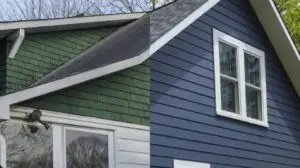
Boothbay Blue — A muted blue-gray from the Statement Collection that reads beautifully against pine trees and Colorado sky. We recently completed a Golden project in Boothbay Blue that demonstrates exactly why this color works in foothills terrain. It’s confident without competing with the landscape.
Mountain Sage — One of the most Golden-appropriate colors in the Hardie palette. It picks up the sage brush and ponderosa undertones in the terrain around Golden and blends naturally into the foothills setting.
Iron Gray and Aged Pewter — For homeowners who want a more neutral modern look with staying power, these work well with Golden’s stone and natural wood architectural elements, particularly paired with dark trim.
Arctic White with dark trim accents — A classic approach for Golden’s historic downtown-adjacent neighborhoods, where clean contrast reads well against older architectural styles.
ColorPlus Technology is our standard recommendation for all Golden installations. The altitude UV argument alone justifies the factory finish over field painting, and the 15-year fade warranty is real protection in a climate where field-painted fiber cement simply underperforms against the solar exposure.
If you want to see how specific colors would look on your Golden home before committing to anything, use our free online visualizer — upload a photo and test the full James Hardie color palette before we ever walk through the door.
The Bottom Line for Golden Homeowners
Golden’s specific conditions — intense UV at 5,675 feet of elevation, Jefferson County’s hail corridor, 150+ freeze-thaw days per year, downslope wind exposure off the foothills, and meaningful wildfire risk in the WUI surrounding the city — create a demanding environment that separates siding products and contractors who are genuinely equipped for this market from those who are not.
James Hardie fiber cement in the HZ5 formulation, installed correctly by an Elite Preferred Contractor with Presidents Club-level accountability, is the best-performing siding product for Golden homes. It is non-combustible, impact-resistant, dimensionally stable through Colorado’s temperature extremes, and available with a factory-applied finish engineered to outlast anything field-painted at Golden’s altitude.
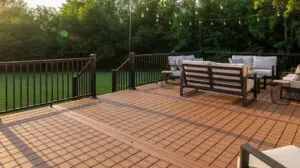
For a full overview of our exterior services in Golden — siding, windows, roofing, and decking — visit our Golden exterior services page.
Ready to talk through your specific project? Call us at (720) 707-6964 or request a free estimate online.
About the Author
Bryce Steckler is the owner and president of 5280 Exteriors, a James Hardie Elite Preferred Contractor and back-to-back Presidents Club Award winner serving the Denver metro, Front Range, and mountain communities. 5280 Exteriors has been in business for over 20 years.