COMPOSITE DECK REPLACEMENT GUIDE FOR BOULDER HOMEOWNERS
Your old wood deck is showing its age. The boards are splintering, the stain is fading under Boulder’s intense UV exposure, and maintenance feels endless. If you’re a Boulder homeowner wondering whether it’s time to replace that aging pressure-treated or cedar deck, you’re not alone. At 5280 Exteriors, we install dozens of deck replacements every year for Boulder residents—and the overwhelming majority choose composite decking over traditional wood. But why switch to composite? And how much will a new deck actually cost in Boulder? This guide breaks down everything you need to know about replacing your deck with composite, including costs, benefits, maintenance, and why Boulder homeowners are making the switch. Whether you’re replacing a 20-year-old wood deck or upgrading from a deteriorating pressure-treated build, composite decking offers durability, aesthetics, and peace of mind that traditional wood simply can’t match—especially in our high-altitude, UV-heavy, freeze-thaw climate.
Signs Your Deck Needs Replacement (Not Just Repair)
Widespread Rot or Wood Decay
If rot has spread across multiple boards (especially structural beams or joists), repair isn’t cost-effective. Composite decks won’t rot, period—they’re engineered to resist moisture and decay, a huge advantage in Colorado’s climate where water damage from snow melt and rain is common.
Splintering, Cracking, or Cupping
Wood decks naturally splinter and crack over time, especially in Colorado’s dry climate and intense sun. If you’re sanding and staining every 2–3 years just to avoid splinters and keep the deck safe, replacement is worth the investment. Composite decking maintains a smooth finish for decades without this constant upkeep.
Structural Issues (Sagging, Unstable Railings)
If your deck is sagging, bouncing, or has loose railings, the underlying structure may be compromised. A full replacement ensures code compliance, safety, and the structural integrity needed for Colorado’s snow load requirements.
More Than 15–20 Years Old
Pressure-treated wood decks typically last 15–20 years in Colorado. If yours is hitting that mark, replacement is more economical than patching.
Composite vs. Pressure-Treated Decking: Why Homeowners Are Switching
Durability & Lifespan
Pressure-treated wood: 15–20 years. Composite (TimberTech): 25–30+ years with minimal maintenance. Over a homeowner’s lifetime, composite pays for itself.
Maintenance
Wood decks require staining, sealing, sanding, and repair every 2–3 years. Composite decks need occasional cleaning and a quick inspection—that’s it. For Colorado homeowners who value their time, this is transformative.
UV & Weather Resistance
Colorado’s elevation (5,280 feet in Denver, higher in the mountains) means intense UV exposure and dramatic temperature swings. Wood fades, warps, and splits. Composite holds its color and shape year after year—critical for our climate.
Rot & Moisture Resistance
Spring snowmelt and summer rain create moisture stress on wood. Composite is engineered to resist rot, mold, and mildew—no surprises, no structural failures.
Composite Deck Replacement Cost in Boulder
What Factors Into the Cost?
- Deck size (square footage)
- Old deck removal & disposal
- Structural framing (beams, joists, posts)
- Frost-proof caissons (critical for Boulder’s freeze-thaw cycles)
- Composite decking board grade and color choice
- Railings, stairs, and safety features
- Boulder permits and inspections
- Site access and complexity
Full-Build Pricing (Labor + Materials)
When 5280 Exteriors handles your complete deck replacement—including structural framing, frost-proof caissons, composite decking boards, and railings—expect $90–$200 per square foot installed.
- Standard composite deck: $90–$130/sq ft
- Mid-range with upgrades (premium composite, multi-level, built-ins): $130–$170/sq ft
- Premium build (top-tier composite, complex design, custom railings): $170–$200+/sq ft
For a typical 400 sq ft Boulder deck:
- Standard: $36,000–$52,000
- Mid-range: $52,000–$68,000
- Premium: $68,000–$80,000+
This comprehensive pricing includes permits, structural engineering for Boulder’s snow load requirements, professional installation, and warranty. It’s a significant investment, but you’re getting a 25–30+ year asset with virtually zero maintenance. Compare that to pressure-treated wood at $8,000–$12,000 every 15 years in repairs, staining, and replacement cycles.
The Deck Replacement Process at 5280 Exteriors
Step 1: Free Consultation & Site Assessment
We inspect your existing deck, discuss your goals (size, features, timeline), and provide a transparent estimate. No surprises.
Step 2: Permits & Planning
We handle all permits and code compliance for your area (Denver, Boulder, Conifer, Evergreen, etc.). No delays, no headaches.
Step 3: Removal & Prep
Old deck removal, site cleanup, and structural inspection. If underlying issues are found, we address them before building.
Step 4: Construction & Installation
Expert framing, composite board installation, railings, stairs, and finishing. Quality craftsmanship from start to finish.
Step 5: Final Walkthrough & Warranty
We review the finished deck with you, answer questions, and provide maintenance guidance. Full warranty on materials and labor.
Why Boulder’s Climate Makes Composite Decking Essential
Boulder sits at 5,430 feet elevation with one of the highest UV exposure levels in the nation. Add to that our freeze-thaw cycles, spring snowmelt, intense hail, and dramatic temperature swings—and traditional wood decks simply don’t last. Here’s what happens to pressure-treated wood in Boulder:
- Fades dramatically within 2–3 years (our UV is intense)
- Splinters from freeze-thaw stress (30°F swings aren’t uncommon)
- Rots faster near snowmelt runoff areas
- Warps and cupping from altitude + dry air
- Requires staining every 2–3 years (hard to schedule around Boulder’s weather)
Composite decking laughs at all of this. It was engineered for exactly these conditions.
WUI Fire Safety: TimberTech’s Class A Fire Rating Advantage
Boulder sits in or near Wildland-Urban Interface (WUI) zones where fire safety is critical. If you’re building or replacing a deck in Boulder—especially in mountain neighborhoods—fire-resistant materials aren’t just nice to have; they’re a smart investment in your home’s defensibility. TimberTech composite decking carries a **Class A Fire Rating**, the highest available for deck materials.
Here’s what that means:
- What Makes TimberTech Class A Fire-Rated?
TimberTech uses advanced PVC (polyvinyl chloride) technology engineered specifically for fire resistance. Unlike traditional wood decks that ignite easily and burn rapidly, TimberTech composite boards resist ignition, slow flame spread, and produce minimal smoke—critical factors in wildfire scenarios. - How This Protects Your Boulder Home
During a wildfire, embers travel miles. A wood deck is essentially kindling attached to your home—a liability. A Class A fire-rated TimberTech deck becomes a defensible barrier, slowing ember penetration and protecting your home’s perimeter. Many insurance companies recognize this and offer discounts for fire-resistant materials. For Boulder homeowners in WUI zones, a TimberTech deck isn’t just an upgrade—it’s a home hardening investment.
TimberTech Composite: Built for Boulder
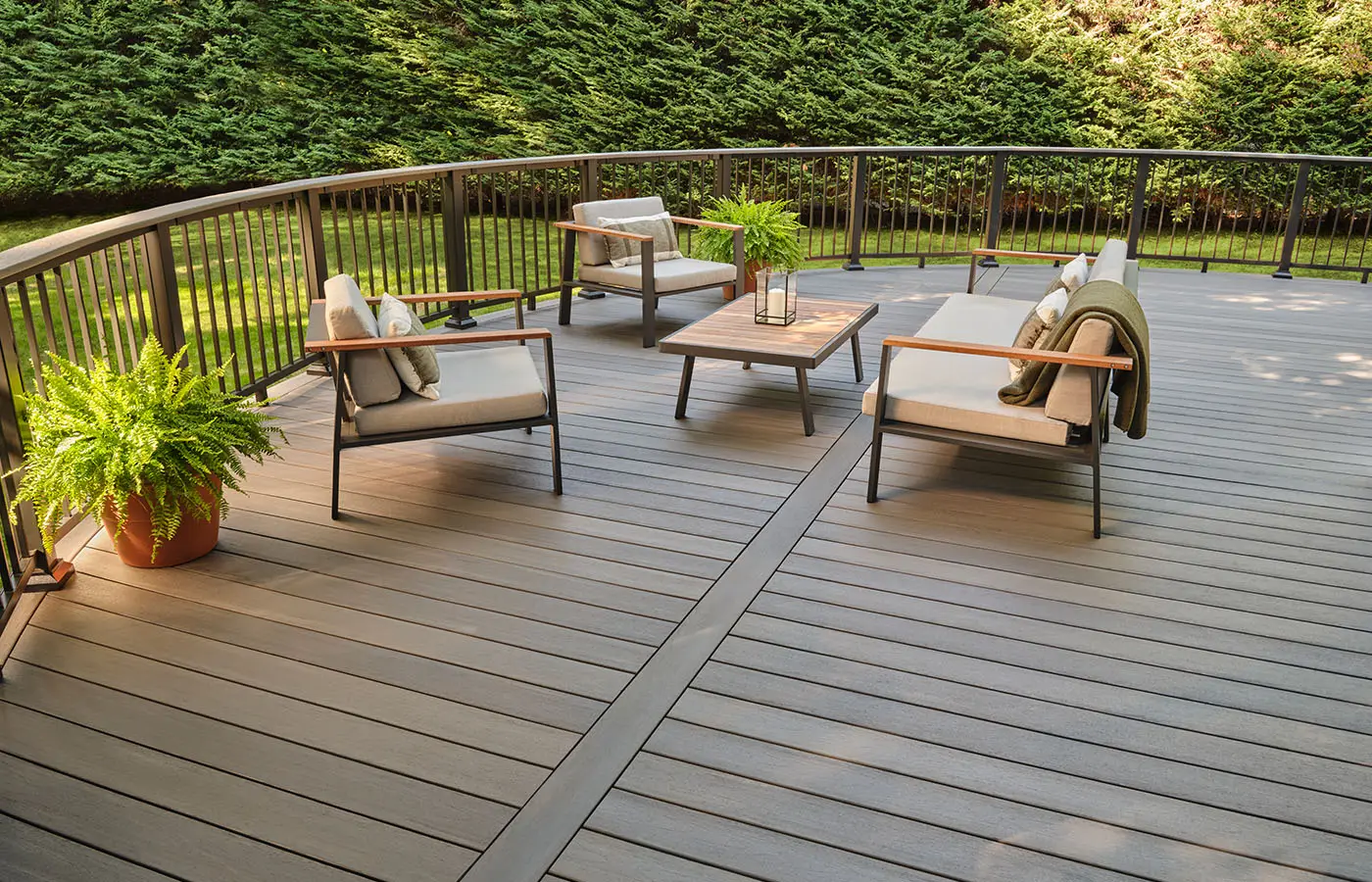
5280 Exteriors specializes in TimberTech composite because it delivers the best balance of durability, aesthetics, and performance for Boulder’s high-altitude, UV-heavy climate. TimberTech boards resist fading (critical at 5,430 ft elevation), resist splinter damage from freeze-thaw cycles, and maintain their appearance for decades with minimal upkeep. Whether you’re in the Pearl District, South Boulder, Table Mesa, or anywhere else in Boulder, TimberTech has color and style options that complement your home’s architecture. Choose from warm cedar-look tones or sleek modern grays—your new deck will look stunning year after year without the maintenance burden.
FAQ: Deck Replacement Questions Boulder Homeowners Ask
Do I need a permit for a deck replacement in Boulder?
Yes. Boulder requires permits for any new deck construction or significant replacement. We handle the entire permitting process—building department, setback requirements, snow load calculations (critical at Boulder’s 5,430 ft elevation). No surprises.
What about Boulder HOA deck restrictions?
Many Boulder neighborhoods (Pearl District, South Boulder, etc.) have HOA rules about deck materials, colors, and size. We’ll review your HOA guidelines upfront and ensure compliance. If you need HOA approval, we’ll help with that documentation.
How does Boulder’s altitude and freeze-thaw affect my deck?
Boulder sits at 5,430 feet with intense UV exposure and freeze-thaw cycles that shred pressure-treated wood. Composite is engineered for this exact challenge—it won’t crack, splinter, or warp from our climate swings.
What about snow load requirements for Boulder decks?
Boulder’s building code includes specific snow load requirements (varies by neighborhood). We design and build decks to exceed these requirements so your new deck is safe year-round.
How long does a deck replacement take in Boulder?
Most Boulder projects take 2–4 weeks depending on size, weather, and permit timeline. We’ll provide an exact timeline after the initial consultation.
Can composite decking handle Boulder’s hail and storms?
Yes. TimberTech composite is impact-resistant and won’t splinter or dent like wood does. It holds up beautifully through Colorado’s spring hail and summer storms.
Why do I need professional installation vs. DIY?
Boulder’s permitting requirements, snow load calculations, and structural codes demand professional expertise. Plus, improper installation voids warranties and creates safety risks. Let us handle it right.
What’s the typical deck replacement cost for Boulder homes?
For a standard 400 sq ft composite deck with permits and professional installation, expect $5,000–$10,000+. Exact cost depends on your home, deck complexity, and current structural condition. We provide free estimates.
Boulder Neighborhoods We Serve
5280 Exteriors has been installing deck replacements across Boulder for 20+ years. We understand the specific code requirements, HOA rules, elevation changes, and aesthetic preferences in each neighborhood:
- Pearl District (walkable, urban decks, strict HOA)
- South Boulder (established, higher-end homes, larger lots)
- Table Mesa (hillside homes, unique drainage challenges)
- North Boulder (family neighborhoods, diverse home styles)
- East Boulder (varied elevations, interesting topography)
- Boulder Valley (rural feel, fewer restrictions)
- Mapleton area (classic neighborhoods, established trees)
Ready to replace your old wood deck with a low-maintenance composite alternative? Contact 5280 Exteriors for a free consultation and estimate. We specialize in composite deck replacements for Boulder homeowners. Let’s build a deck you’ll enjoy for the next 25+ years without the maintenance headaches.
5280 Exteriors is your expert for all siding, windows, decking, and roofing in Boulder.